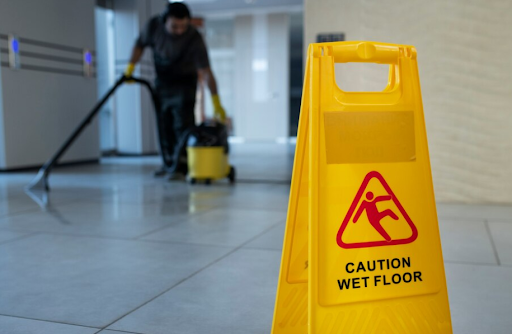
Accidents that involve slip-and fall can happen anywhere. The injuries can range from bruises, to head injuries and fractures. You may wonder if it is possible to sue for slipping near a sign stating “wet floors”. The answer depends on several factors such as whether or not the owner of the property took reasonable measures to ensure safety.
This article gives an overview of the legal issues that may arise.
Understanding Premises Liability
Premises liability is a concept in law that holds property owners, occupants and others accountable for providing a safe environment for visitors. A property owner may be responsible for any injuries that result from a dangerous condition in their property. However, premises liability cases are complicated, particularly if there is a sign that indicates a wet floor.
What is the purpose of the sign that says “Wet Floor”?
The sign warns of a potentially hazardous condition, such as a slippery surface. The wet floor sign may indicate that either the owner or staff of the property have taken measures to warn the public about the danger. The property owner or their staff are still liable for any damage caused by the wet floor sign.
This question is dependent on several factors.
- Placing the Sign: Was it clearly visible at the location of the slippage? If the sign was not placed in an obvious place or far from the danger area, it may not have provided enough warning.
- Adequacy: Is the warning clear and visible? Signs placed behind a wall or in the wrong directions, for instance, might not alert visitors.
- The owner or staff has addressed the issue? A wet floor sign may not be sufficient if the hazardous condition was ignored for some time.
What grounds can you use to sue?
In certain situations, you may be able to sue even if a sign was clearly visible indicating that the floor had been soiled. These scenarios include:
1. Signs in inappropriate locations
If the owner of the property is negligent, it could be because the sign was too far from the area that is wet or the sign has been obscured. The owner may be negligent if the sign warns you to stay away from the spill but is located in another location.
2. The Hazard Is Not Addressed
Wet floor signs should be only used as temporary measures. The sign does not remove the need to address the actual danger. If the property owner or staff failed to clean spills up or make an area safe within a reasonable time, they may be responsible for your injuries.
3. Other contributing factors
This may help you if there are other factors that contributed to the fall, such as insufficient lighting, uneven flooring, or lack of maintenance. Even if the sign reads “wet floors”, property owners still have to ensure that their premises are reasonably safe.
Limitation of Liability
In some cases, you may have a valid claim. However, in other situations the owner is only liable for a short period of time.
1. Obvious Hazards
You may have to argue that you should’ve taken precautions if there was a sign and a wet floor was an obvious and open danger. Courts may consider whether a reasonable individual would have avoided the danger.
2. Contributory Negligence
Some states have laws that allow for comparative negligence or contributory fault. Your actions can impact your ability to recover compensation. Your claim may be reduced or even eliminated if you ignored warnings or were distracted.
3. There is a large warning
If the property owner provides a sign that is clearly visible, such as a wet floor symbol, he/she may claim to have fulfilled their duty of care. It would be more difficult to hold the property owner responsible if they provided a clearly and sufficiently visible sign such as the wet floor symbol.
Proving Your Case
To successfully file a slip and fall claim, you must be able demonstrate these elements:
- Duty of care: You have a responsibility to the owner of the property to maintain a safe environment.
- Breach of duty: A property owner who has not met their obligations, such as by failing to address hazards or providing insufficient warning.
- Casation: Your slip, and the subsequent injuries that resulted from it, were directly caused by a breach of duty.
- Damages: You suffered real harm, such as medical expenses, lost wages, or pain and suffering.
Evidence is essential to support your claim. Important evidences include:
- Take pictures of the accident scene, including the location of the sign that indicates a wet flooring.
- Witnesses to the hazardous fall or condition.
- Surveillance footage, if available.
- Your medical records detailing your injury.
What to do if you slip and fall?
To protect your legal rights, take the steps below if you fall and slip on a sign stating “wet flooring”:
- Report the incident. Inform the property owner or manager immediately. Ask for a written report of the incident.
- Document the Scene. Document the Scene. Take photos of the area, including the wet floor sign and other contributing factors.
- You should seek medical treatment, even if your injuries seem minor. This will allow your doctor to document your condition. This will ensure that you receive the right treatment.
- Call witnesses and get their contact information.
- Consult an attorney: An experienced personal injury lawyer can guide you and help you with your case.
Final Thoughts
If you slip and fall near a sign stating “wet floors”, then you can still file a lawsuit. The success of your claim depends on several factors such as whether the warning was effective and what the property owner did, or if you fell because of additional hazards.
Consult an attorney if you suspect the negligence of a property owner played a role in your accident. They can assist you in gathering evidence and assessing your case. By taking immediate action, you can protect your legal rights and work towards a successful settlement of your claim.
This article was written by Jeanette Secor PA Attorney at Law.
Since over 20 years, Jeanette Secor’s law firm in St. Petersburg has been the first choice of those who are seeking justice following an injury. Renowned as st petersburg fl personal injury lawyer, Jeanette Secor has a proven track record of successfully representing clients in car accidents, motorcycle accidents, and slip-and-fall incidents.